




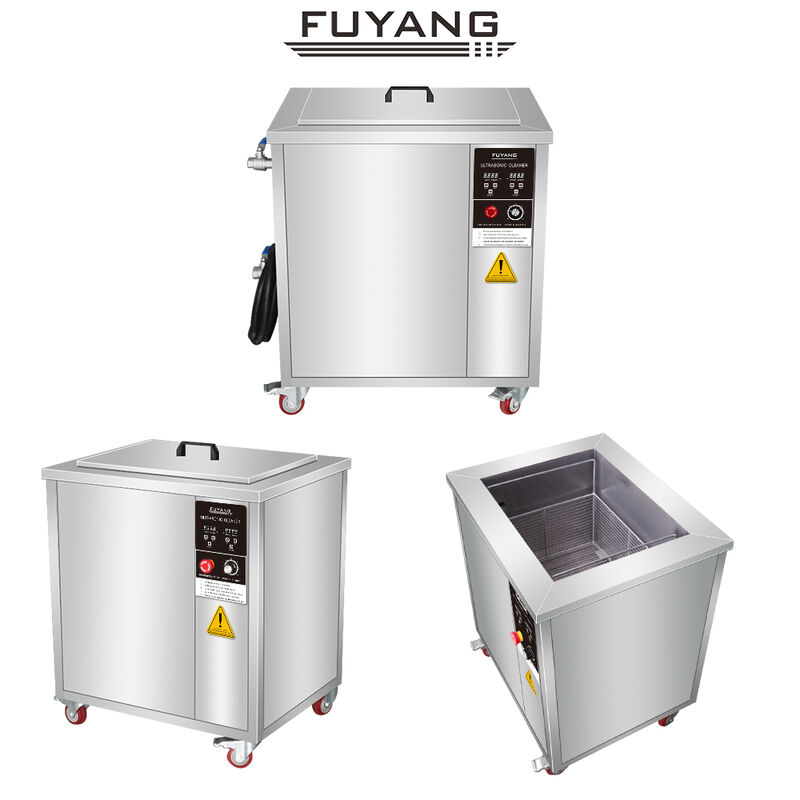
SUS304 45L Ultrasonic Printhead Cleaner , Ultrasound Bath Cleaner SUS304 Knob Control
Specifications:
| Model name | F-120 |
| Internal tank size | 500*300*300mm |
| Application | Clean Spray Flannel Mold |
| Function | Removing dirts, oil, rust, grease |
| Feature | No damage to precision mold |
| Tank capacity | 45L |
| Ultrasonic power | 700W |
| Heating power | 1500W |
| Time control | 0~99 minutes |
| Temperature control | 20~95℃ |
| Water inlet / outlet | Yes |
| Voltage | 220V / 110V |
Same models with different capacity
1.How do I get the best ultrasonic cleaning?
There are many considerations important to ultrasonic cleaning. Optimizing these variables will produce the best cleaning. The most important decisions to be made are choosing the proper cleaning solution, cleaning at the right temperature for the correct amount of time, and choosing the right size and type of ultrasonic cleaner.
Q2.Can ultrasonic cleaning damage my parts?
With certain cautions, ultrasonic cleaning is considered safe for most parts. While the effects of thousands of implosions per second is very powerful, the cleaning process is safe since the energy is localized at the microscopic level. The most important cautionary consideration is the choice of cleaning solution. Potentially adverse effects of the detergent on the material being cleaned will be enhanced by the ultrasonic.
Q3.Why is a special solution required for cleaning?
Soils adhere to the parts... if they didn't, the soil would just fall off the parts! The purpose of the solution is to break the bond between parts and their soils. Water alone has no cleaning properties. The primary purpose of the ultrasonic activity (cavitation) is to assist the solution in doing its job. An ultrasonic cleaning solution contains various ingredients designed to optimize the ultrasonic cleaning process. For example, increased cavitation levels result from reduced fluid surface tension. An ultrasonic solution will contain a good wetting agent or surfactant.
Q4.What cleaning solution should I use?
Modern ultrasonic cleaning solutions are compounded from a variety of detergents, wetting agents and other reactive components. A large variety of excellent formulations are available, designed for specific applications. Proper selection is crucial for acceptable cleaning activity and to preclude undesirable reactivity with the part being cleaned.
Q5.What cleaning solution shouldn't I use?
Flammables or solutions with low flash points should never be used. The energy released by cavitation is converted to heat and kinetic energy, generating high temperature gradients in the solution, and can create hazardous conditions with flammable liquids. Acids, bleach and bleach by-products should generally be avoided, but may be used with indirect cleaning in a proper indirect cleaning container, such as a glass beaker, and appropriate care. Acid and bleach will damage stainless steel tanks, and/or create hazardous conditio